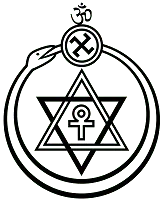

“We must accept truth wherever we find it, no matter what garb it wears, and no matter whether it be from the East or the West.”
— H. P. Blavatsky, Collected Writings, vol. IX, p. 99
Series: Introduction to Theosophy
Introduction
Theosophy — understood as the quest for universal spiritual wisdom — proposes an integrative vision of humanity’s great traditions, and rests upon a broad heritage of spiritual traditions, philosophical schools, and authors who have expressed this wisdom in different eras. This section presents some of these references as starting points for comparative study and personal deepening.
This perspective seeks to recognize the presence of the same spiritual impulse — manifested in different forms — that guides the evolution of human consciousness. Studying these traditions and authors is also practicing spiritual discernment: perceiving the essential beyond the form, recognizing the inner quality of a teaching more than its external appearance.
Recognizing lineages of thought that have influenced contemporary theosophical formulation. Humanity’s spiritual traditions, with their symbols, practices, and cosmologies, constitute the fertile soil where this wisdom manifests in different languages.
Spiritual Traditions
Throughout history, various spiritual traditions have offered complementary visions regarding the nature of the soul, the cosmos, and the evolution of consciousness. Theosophy synthesizes and deepens these teachings:
- Hinduism and Vedanta – Concepts such as karma, reincarnation, and the unity of the soul.
- Mahayana and Tibetan Buddhism – Compassion, emptiness, states of consciousness, and the initiatic path.
- Neoplatonism – The idea of an absolute One and the soul’s ascent through purification and knowledge.
- Mystical Christianity – The presence of the inner Christ, the way of the heart, and initiatic symbolism. Meister Eckhart, St. John of the Cross, and St. Teresa address the inner birth of Christ and the dark night of the soul.
- Kabbalah – The study of the universe as a manifestation of divine principles and the hidden levels of reality.
- Hermeticism – The esoteric wisdom of Egypt and Greece, synthesized in principles such as “as above, so below.”
- Western initiatic traditions – Currents such as alchemy, Rosicrucianism, and esoteric Freemasonry have contributed to the transmission of symbols and practices linked to spiritual awakening.
- Taoism – The wisdom of the universal flow (Tao), the balance between complementary forces (yin-yang), and spontaneous action (wu wei).
- Ancestral shamanism – Present in indigenous cultures worldwide, it values direct contact with the subtle realms of nature and the initiate’s role as mediator between worlds.
Central Authors of Modern Theosophy
Modern Theosophy did not arise in isolation, but crystallized through the work of individuals who dedicated themselves to transmitting, systematizing, and expanding spiritual wisdom.
- Helena P. Blavatsky – Founder of the Theosophical Society. Her most influential works are The Secret Doctrine and Isis Unveiled. She introduced concepts such as the seven planes of existence, root races, and the symbolic language of ancient traditions. She also emphasized the existence of a universal “Secret Doctrine” — veiled in all great religions and mythologies — that can be recovered through comparative study and spiritual intuition.
- Annie Besant – Charismatic leader of the Theosophical Society, writer, and social reformer. She collaborated in disseminating themes such as the causal body, karma, and spiritual education. Her work helped consolidate Theosophy as an organized movement, with emphasis on values such as brotherhood, service, and moral development. She deepened certain doctrinal aspects more systematically than Blavatsky. Her style is direct and pedagogical, aimed at those seeking practical spirituality.
- C. W. Leadbeater – Known for his studies on clairvoyance and subtle planes. Author of works such as The Chakras, The Astral Body, and Life After Death. Leadbeater is a polarizing figure within the theosophical movement — both for his assertions and for biographical issues. Nevertheless, his work made esoteric themes accessible to a broader audience, with more direct and applied language than that of Blavatsky or Bailey.
- Alice A. Bailey – Developed a profound synthesis between Theosophy, psychology, and planetary vision. She wrote under the inspiration of the so-called Masters of Wisdom — spiritual consciousnesses that, according to theosophical tradition, guide humanity’s inner development — with notable works including A Treatise on Cosmic Fire, Initiation, Human and Solar, and the books on the Rays and Initiations. Bailey presented her work as conscious collaboration with Master Djwhal Khul. Key themes include esoteric psychology, group service, and planetary evolution.
Other Relevant Contributors
Beyond the central figures, other individuals have enriched the theosophical field or expanded it in new directions:
- G. de Purucker: Theosophist of the original line and successor to Katherine Tingley in leading the Point Loma Theosophical Society. He emphasizes doctrinal precision and deepens themes such as reincarnation, planetary chains, and universal principles. His work The Esoteric Tradition is considered one of the most complete systematizations of classical post-Blavatsky Theosophy.
- Rudolf Steiner: Founder of Anthroposophy, which emerged as a branch of Theosophy. Steiner integrated esoteric Christian ideas and developed practical applications of spiritual knowledge in areas such as education (Waldorf pedagogy), agriculture (biodynamic farming), and medicine. He distanced himself from the Theosophical Society but maintained the ideal of a rigorous and experiential spiritual science.
- Paul Brunton: Spiritualist philosopher who served as a bridge between Western esoteric thought and Eastern traditions, especially Vedanta and Yoga. He popularized themes such as silent meditation, the Higher Self, and the inner quest, always with emphasis on direct experience. His accessible style influenced many Western seekers in the first half of the 20th century.
- Roberto Assagioli: Italian psychiatrist and creator of Psychosynthesis, a therapeutic approach that integrates modern psychology with esoteric elements, such as the Higher Self, spiritual will, and levels of consciousness. Though not directly linked to the Theosophical Society, his work shares with Theosophy the ideal of integration between science, soul, and practical spirituality.
- Jiddu Krishnamurti: Raised under the guidance of the Theosophical Society, he was initially designated as the vehicle of a “spiritual mission” by the leaders of the time. However, he broke with the institution and developed a teaching centered on inner freedom, direct observation, and the rejection of all external spiritual authority. He broke with formal Theosophy, but many of his themes — such as self-knowledge, mindfulness, and the illusion of the ego — remain aligned with the essential principles of the spiritual quest.
- Sri Aurobindo: Indian philosopher and mystic who described the evolution of consciousness as a spiral process in which spirit seeks to manifest fully in matter. He developed the concept of Supermind (Supramental) and wrote about integral yoga, spiritual synthesis, and inner transformation as an evolutionary goal.
- Dion Fortune: British Christian esotericist of the 20th century, founder of the Fraternity of the Inner Light. Her work articulates esoteric symbolism, depth psychology, and ritualistic practices, especially in the context of Kabbalah and the Western mystery tradition. In The Mystical Qabalah, she integrates occult knowledge with a modern psychospiritual approach.
How to Approach These Authors
These authors are transmitters of universal wisdom, not infallible authorities. Critical reading, comparative study, and personal reflection are essential. Their writings awaken intuition and expand inner vision — they do not constitute dogma.
Different authors reveal diverse aspects of the same truth. What sounds contradictory in form is often complementary on the level of essence. Spiritual discernment seeks attunement with that which expands consciousness and elevates inner vibration.
Tips for Personal Study
The value of these teachings lies in what they awaken within us, not merely in the ideas they convey. Studying with attention and presence transforms learning into lived experience. Some practical suggestions:
- Choose an author or tradition that intuitively resonates with you — there is no “correct” order to begin.
- Read with attention, but also with inner openness: observe the vibrational impact of the words and how they echo in your consciousness.
- Keep a study notebook to record doubts, intuitions, striking quotations, and personal reflections.
- Avoid seeking ready-made answers. See the texts as portals for your own investigation, sources of inspiration for your path.
Conclusion
The diversity of traditions and authors presented here is an invitation to conscious exploration: finding the keys that resonate with your own journey. Each teaching has value when it awakens a deeper question, a more compassionate gesture, or a broader vision. True study begins when what we read moves us from within.
And most importantly: no prior familiarity with these authors or traditions is necessary. Simply begin with whatever resonates with your inner moment. The most important thing is to maintain an open listening and an attentive heart.
Series: Introduction to Theosophy
Support the Project
This site is independently maintained, with no institutional ties. If the content inspires you, consider supporting it through a small donation.