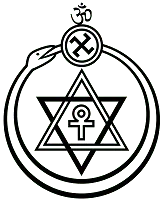

“Theosophy has always been present in the minds of men, though disguised under different names and external forms.”
— H. P. Blavatsky, The Key to Theosophy, Chapter I
Series: Introduction to Theosophy
Introduction
What is Theosophy? This question has no single, definitive answer — and perhaps that is one of its greatest riches.
Theosophy is a path of spiritual investigation based on the universal wisdom that underlies the diverse religious, philosophical, and mystical traditions of humanity. It is an investigative attitude that values self-knowledge, comparative study, and inner experience.
This page invites a first contact — or a rediscovery — of an ancient tradition that continues to offer meaning and direction to seekers in the present.
Origin of the term
The word Theosophy comes from the Greek theos (divine) and sophia (wisdom), being traditionally translated as “divine wisdom” or “wisdom of divine things”.
The term has been used throughout history by different spiritual and philosophical currents, such as the Neoplatonists, Renaissance Christian mystics, and some authors of European esoteric philosophy. It gained new momentum in the 19th century with the emergence of so-called Modern Theosophy, associated with the founding of the Theosophical Society.
Modern Theosophy
So-called Modern Theosophy emerged in the late 19th century with the founding of the Theosophical Society in 1875 by Helena P. Blavatsky, Henry S. Olcott, and William Q. Judge in New York.
This movement represented universal ideas in a language more accessible to the West, at a time of growing interest in Eastern religions, occultism, and comparative philosophy. The fundamental principles already existed — but they were scattered across distant traditions or encoded languages.
Blavatsky, especially through her works Isis Unveiled and The Secret Doctrine, proposed the existence of a universal esoteric tradition that manifests, in different degrees, in the world’s great religions, philosophies, and mythologies.
Fundamental Principles
Theosophy, as formulated by its main modern authors, imposes no dogmas nor requires belief. It proposes guiding principles that can be studied, questioned, and experienced according to individual discernment.
Among the recurring concepts, the following stand out:
- Essential unity of life – everything that exists is interconnected in a single evolutionary and spiritual process
- Evolution of consciousness – life develops in cycles, not only in physical terms but also psychological and spiritual
- Karma and reincarnation – the soul evolves through multiple life experiences, guided by laws of cause and effect
- Search for truth beyond dogma – each individual is responsible for their inner journey; no belief should be accepted without investigation
They are working hypotheses that each student can test in their own experience. The essential unity of life, for example, does not ask for belief in metaphysical dogma — it asks for observation: recognizing that every action has effects beyond the individual, that all separation is illusory at its root. Karma and reincarnation, in turn, do not serve to speculate about past lives but to understand present responsibility: if consciousness evolves through successive experiences, each choice today shapes tomorrow’s ground.
The search for truth beyond dogma is perhaps the most radical principle. Theosophy does not offer ready-made truths — it offers methods, perspectives, maps. The student does not learn what to think, but how to think: with clarity, discernment, and humility before the mystery.
These principles form a basis for study, meditation, and action in the world, but never a closed or definitive set.
Theosophy as practice
“Theosophy is essentially the science of the soul of man and the soul of the universe. […] Its study must be at once philosophical, practical, and spiritual.”
— H. P. Blavatsky, Isis Unveiled, vol. I
This triad — philosophical, practical, and spiritual — defines the nature of Theosophy. Despite its extensive philosophical and symbolic content, Theosophy is not merely a system of ideas — it is also a proposal for spiritual living.
Theosophical practice is, by nature, individual and non-ritualistic. It manifests in three central pillars:
- Study – reflective reading of classical and modern texts, seeking to understand spiritual laws and their reflections in daily life
- Meditation – cultivation of inner attention and contact with more subtle levels of consciousness
- Service – selfless action in the world as a natural expression of spiritual understanding
There are no mandatory practices or unique techniques. Each student is encouraged to seek for themselves, developing discernment and balance over time.
Theosophy and modern spirituality
Theosophy is rooted in ancient traditions but has a profoundly contemporary character. Its principles dialogue with contemporary themes such as:
- the search for inner meaning outside organized religions
- the integration of science, psychology, and spirituality
- the awakening of a planetary ethics based on the interconnection of all beings
Theosophical study can benefit from complementary practices — such as esoteric astrology, transpersonal psychology, Reiki, or modern symbolic systems — provided they are approached with respect, discernment, and coherence with universal spiritual principles. A student can, for example, use astrology to understand personal cycles, as long as this does not replace the work of inner self-knowledge.
Theosophy integrates what is essentially true in each time and language, without rejecting novelty or sacralizing tradition.
What Theosophy is not
Theosophy is frequently misunderstood — both by hasty sympathizers and by uninformed critics. It is worth clarifying what it does not claim to be:
- It is not an organized religion – although it addresses spiritual themes, Theosophy has no dogmas, priesthood, mandatory rituals, or institutional worship
- It is not a sect – it does not require submission to leaders, internal rules, or exclusivity of thought
- It is not synonymous with a single organization – the Theosophical Society was one of the historical vehicles of modern Theosophy, but Theosophy transcends any institution
It is a path of study and inner transformation, open to all who seek truth in a sincere, responsible, and free manner.
Recommended Reading
These works are safe starting points for those who wish to deepen their understanding of theosophical thought. The selection includes different styles — from meditative to systematic — and covers the main foundations of the tradition:
- The Voice of the Silence (H. P. Blavatsky): a collection of contemplative aphorisms, ideal for those seeking inspiration and inner depth
- The Ancient Wisdom (Annie Besant): classic introduction to the fundamental concepts of Theosophy: reincarnation, karma, planes of existence, soul, and evolution.
- A Textbook of Theosophy (C. W. Leadbeater): panoramic view of the doctrine, written in accessible language and focused on the practical application of theosophical principles.
- The Chakras / The Astral Body / The Mental Body (C. W. Leadbeater and A. E. Powell): studies on the subtle bodies and invisible planes that integrate our energetic constitution.
- At the Feet of the Master (J. Krishnamurti – Alcyone): small manual on the fundamental qualities for discipleship: discrimination, desirelessness, good conduct, and love.
- The Soul and Its Mechanism (Alice A. Bailey): introductory work by the author, establishing bridges between psychology, Theosophy, and inner spirituality.
- Self-Culture in the Light of Theosophy (I. K. Taimni): practical and profound synthesis on how to develop the inner being in the light of theosophical teachings.
- Initiation, Human and Solar (Alice A. Bailey): beginning of a more esoteric and psycho-spiritual approach.
Each line of study can lead to other authors, schools, or complementary practices.
There are also several articles and books that can be consulted here on the site.
Conclusion
Theosophy does not offer ready-made answers but tools for thinking, feeling, and living with more awareness. It does not require blind faith nor reject sincere doubt — on the contrary, it values questioning as an essential part of the spiritual path.
Upon encountering Theosophy, do not expect passivity: look within yourself, recognize the unity of life, gradually assume a more lucid, compassionate, and responsible posture in the world.
If this content awakened your interest, explore the other sections of the site. The journey of spiritual knowledge is vast and always under construction.
Series: Introduction to Theosophy
Support the Project
This site is independently maintained, with no institutional ties. If the content inspires you, consider supporting it through a small donation.