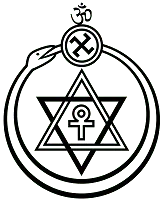

“Evolution is the unfolding of consciousness through experience across the various planes of existence.”
— Theosophical Synthesis
Among the many foundational concepts of the esoteric tradition, the idea stands out that the world we live in — with its different planes of existence — is more than a stage: it is the very field of evolution of consciousness. Understanding this subtle structure allows us to properly situate the role of the personality, the soul, and the higher levels of being in their journey of spiritual development.
Far from representing an escape from the world, spiritual evolution is, from this perspective, a process of integration and expansion of consciousness toward its origin. Each plane reveals an aspect of reality — and of the soul itself — to be recognized and integrated.
An Overview of the Planes
The esoteric tradition offers a broad and integrated vision of reality: the world is not limited to the physical plane but unfolds across different levels of matter and consciousness, known as planes of existence.
These planes form the field in which consciousness evolves. They are vibratory layers that coexist simultaneously and interpenetrate, from the densest levels — like the physical body — to the most subtle, like the divine plane.
The most familiar planes are the physical, astral, and mental, where the personality manifests. Above these, the buddhic and atmic planes express the consciousness of the soul and spiritual will. Still higher, the anupadaka and adi planes refer to the consciousness of the Logos itself.
The table below, inspired by Arthur Powell, organizes these planes into series associated with the development of consciousness:
| Number | Sanskrit Name | Portuguese Name | Field of Evolution |
|---|---|---|---|
| 1 | Adi | “first” | Logoic |
| 2 | Anupadaka | “without vesture” | |
| 3 | Atma | Spirit | Supernormal human (Initiates) |
| 4 | Buddhi | Intuition | |
| 5 | Manas | Mind | Normal human, animals, plants, elementals |
| 6 | Kama | Emotion | |
| 7 | Sthula | Physical activity |
Note: This order is not spatial, but vibratory. The planes are not “stacked,” but coexist — and each represents a dimension of conscious experience.
These planes should not be understood as distant places, but as states of vibration and consciousness present here and now, though not always accessible to ordinary perception. Each one acts as a specific vehicle for the expression of the soul and its relationship with the world.
In simplified terms:
- Physical plane (sthula): where our actions and sensory perceptions manifest.
- Astral plane (kama): where desires, emotions, and instinctive reactions reside.
- Mental plane (manas): where thought occurs, divided between concrete and abstract.
- Buddhic plane (buddhi): field of intuition and perception of unity.
- Atmic plane (atma): expression of spiritual will and conscious direction.
- Anupadaka and adi planes: levels of consciousness linked directly to the Monad and the Logos.
To understand this structure is to understand oneself: each plane corresponds to an aspect of our being. Along the spiritual path, we learn not only to know them intellectually, but to experience them — in meditative states, in moments of inner silence, and in the ability to serve the world in a centered and inspired way.
This understanding will be the basis for exploring, in the following sections, how the bodies of expression are formed in each plane, and how the human being interacts with these different layers of reality.
The Interpenetration of Planes and the Presence of the Divine
One of the keys to understanding the planes of existence is realizing that they are not stacked in physical layers, as if we were “ascending” from the physical to the spiritual. Instead, they interpenetrate each other, coexisting in the same space but at different vibrational frequencies.
It’s common to compare them to the layers of an onion — and while this may seem helpful at first, it tends to reinforce the mistaken notion of spatial separation. A more appropriate analogy is that of a jar with stones, sand, and water:
Imagine a jar. First, we place large stones in it. Then we pour in smaller stones, then sand, and finally water. Even though the jar seemed full from the start, new elements found room — because they existed at different levels of density.
The same applies to the bodies of expression: the physical body can be seen as the large stones, while the emotional, mental, buddhic, and atmic bodies would be the sand and the water. All of them occupy the same space, interpenetrating and vibrating at distinct levels of the same reality.
The divine plane, therefore, is not “up there,” but right here — interpenetrating the physical world, present within us and around us, though not always perceived.
This understanding radically changes how we approach spirituality. Seeking contact with subtler planes does not mean imagining a distant place, but rather reaching inner states of greater harmony, silence, and unity — vibrations that make us receptive to higher realities.
As Theosophy reminds us, each plane can be accessed from consciousness, not through physical travel. And the more refined our perception, the more clearly we see that the divine is not separate — it surrounds us, sustains us, and pulses at every level of being.
In the next sections, we’ll see how this interpenetration affects how the bodies relate, and how each plane requires a proper vehicle for consciousness to act, perceive, and evolve within it.
Density, Vibration, and the Need for Vehicles of Expression
When we understand that the planes of existence coexist but operate at different frequencies, an important consequence emerges: the subtler planes do not interact directly with the denser ones.
A physical example may help: think of electrons — subtle, invisible particles that pass easily through dense matter. When we place a finger on a live wire, we feel the current — an organized flow of electrons — pass through our body. What we call “solid matter” poses no obstacle to these particles because they vibrate at a finer level than the aggregated atoms of the body’s tissues.
From the electron’s point of view, dense matter might be seen as “invisible,” or even “nonexistent.” It simply offers no relevant resistance.
This helps us understand why consciousness, to interact in a plane, needs a body formed of that plane’s matter. A consciousness manifesting through an astral body, for instance, cannot act directly in the physical world. It needs a suitable physical vehicle — the biological body — to operate on this dense plane.
Thus, every plane of existence requires a compatible instrument: a body composed of the appropriate type of matter. This explains why we possess multiple vehicles of expression — physical, etheric, astral, mental — and why death does not mean the end of consciousness, but rather the cessation of activity in a given plane.
This reality also underpins the idea that self-knowledge includes recognizing our multiple vehicles and the need to keep them harmonized. When the bodies are in alignment, consciousness flows more freely between the planes — and can act more integrally in its evolutionary journey.
The Origin of the Journey: From Logos to Monad
In Theosophical teachings, we learn that consciousness does not originate on the physical plane, but descends progressively from subtler planes in search of experience, expression, and realization. At the highest point of this scale — the Adi plane — resides the Logos, the Divine Consciousness that animates our entire system.
This Supreme Consciousness is not static. Just as we evolve, so too does the Logos — within a vaster cosmic scale. The way it grows is through experiences acquired by the lives that emanate from it — sparks of its own essence projected into the lower planes.
This projection occurs on the plane just below Adi, called Anupadaka, whose name literally means “without progenitor” — a reference to its role as the plane of spiritual self-emanation. It is there that the consciousness of the Logos clothes itself in matter for the first time and originates what we call Monads.
Monads are individualized divine sparks — fragments of the Logos’s consciousness — that carry within them the evolutionary impulse and the potential to return to the Source with greater fullness and wisdom.
This process is poetically illustrated in passages from esoteric literature:
“Lift your head, O Lanoo; do you see one flame or countless lights above you, burning in the midnight sky? ‘I see a flame, O Gurudeva; I see innumerable clustered sparks shining there.’”
— The Secret Doctrine
And also:
“Where is your individuality, Lanoo, where is the very Lanoo himself? It is the spark lost within the flame, the drop within the ocean, the ray of light ever-present that becomes the Whole and the eternal Radiance.”
— The Voice of the Silence
Each Monad then descends through the various planes of existence, progressively veiling itself in layers of matter — until it reaches the levels where it can, for the first time, experience the world through more concrete forms. This descending impulse gives rise to what we know as the Ego (or soul) and, later, the personality with its various vehicles of manifestation.
This process defines the distinction between the three great evolutionary fields described by authors like Arthur Powell:
- Logoi Field: the Adi and Anupadaka planes, where the Logos’s consciousness resides and Monads are born.
- Superhuman Field: the Atma and Buddhi planes (Spirit and Intuition), where the Ego operates and where Initiates dwell.
- Human and Subhuman Field: the lower mental, astral, and physical planes, where the personality and earthly life forms develop.
Evolution, in this view, is the movement of consciousness that descends to experience and ascends to integrate. Each plane represents a stage in this journey and an opportunity for the soul to express itself — until all experiences are unified and return to their origin with awakened awareness.
“Analogous concepts to this evolutionary field also appear in the Kabbalah (the worlds from Atziluth to Assiah), in Vedanta (the five koshas), and in ancient Gnostic schools. Theosophy integrates them into a single evolutionary spiral of consciousness.”
The Structure of the Personality: Bodies and Energetic Limits
Throughout the evolutionary journey, the Monad — through the soul — projects a part of itself into the lower planes, giving rise to the personality. This personality, in turn, manifests through three main bodies:
- Physical body (Sthula), including the etheric double;
- Astral body (Kama), the seat of emotions;
- Lower mental body (Manas), the seat of concrete thought.
These bodies are not “layers” stacked like an onion, but rather interpenetrating vibrational fields, coexisting in the same physical space, each in its own frequency of matter.
The consciousness acting through these bodies is not limited by volume or location, but by the quality of the matter with which it can identify and express itself.
Though invisible to the ordinary senses, these bodies extend beyond the physical body in varying degrees. A practical and didactic way to visualize their approximate boundaries is as follows:
- With your fist vertical and placed against the side of your torso, you can imagine the boundary of the etheric body — the subtle part of the physical.
- With your fist horizontal, extended forward, you approach the reach of the so-called health aura — made of subtle physical particles.
- With your fist on your waist and elbow extended outward, you estimate the average reach of the astral body — your emotional field.
- With your arm extended sideways at shoulder height, you approximate the reach of the lower mental body — the field of concrete thought.
These measures are, of course, symbolic and adapted to common perception, but they help illustrate how the personality occupies a multidimensional sphere of action, extending beyond the visible limits.
This structure is fundamental not only for daily functioning but for the very process of evolution: it is through the refinement and integration of these bodies that the soul can express itself more clearly and consciously.
In the next section, we’ll take a closer look at the first of these planes — the physical plane — to understand how it is structured, subdivided, and animated by the energies that sustain life.
The Physical Plane (Sthula)
The Physical Plane is the densest of the seven planes of existence. It is here that consciousness takes on its most condensed expression, interacting directly with tangible matter. However, this plane is far from simple: it is subdivided into seven subplanes, ranging from solid to the most subtle etheric — and beyond, encompassing forms of matter not yet recognized by contemporary science.
From the Theosophical perspective, the three densest subplanes correspond to the known states of solid, liquid, and gas. The four upper subplanes, called the etheric subplanes, are composed of increasingly subtle vibratory degrees — from the densest ether to the atomic ether.
This spectrum of density represents progressive levels of matter organization, with particles becoming increasingly smaller, faster, and more responsive to consciousness.
Arthur Powell, in The Etheric Double, reproduces a chart from The Theosophist (1922), created by F.T. Pierce, attempting to correlate the physical subplanes with known (or theorized) particles in physics:
| Occult Chemistry | Physics (1922) | Example |
|---|---|---|
| E1 Atomic | Electronic | Electron |
| E2 Subatomic | Positive nucleus | Alpha particle, mesons, protons |
| E3 Superetheric | Neutralized nucleus | Neutron |
| E4 Etheric | Atomic | Atomic hydrogen, nascent nitrogen |
| Gaseous | Molecular gas | H₂, N₂ or gaseous compounds |
Naturally, with the advances in quantum physics, this correlation is now imprecise — and was only approximate at the time. The main point, however, remains valid: the more subtle subplanes correspond to increasingly refined forms of matter, more energetic and less perceptible to ordinary senses.
The Etheric Double: Bridge Between the Physical and the Subtle
Among the most important aspects of the physical plane is the so-called etheric double — the vital energy body that interpenetrates and sustains the dense physical body. It is formed predominantly of matter from the four etheric subplanes and acts as the conduit of prana, or vital energy, that maintains organic life.
“Without such an intermediate bridge, the ego could not use the cells of his brain.”
— C.W. Leadbeater, The Chakras
The etheric double also functions as a transmission bridge between the subtle bodies and the physical nervous system, being particularly sensitive to thoughts and emotions. Its activity explains many observed effects in energy work, altered states of consciousness, and even healing phenomena.
It is possible that electrons, as extremely mobile physical particles involved in all bioelectrical functions of the body, are related to this etheric subplane. This association helps illustrate the etheric double’s role as an interface between thought impulses and the functioning of the brain and body.
The Health Aura: Mirror of Vitality
Another noteworthy component of the physical plane is the so-called health aura, which extends slightly beyond the etheric body. It is composed of subtle particles from the three densest subplanes of matter (solid, liquid, and gaseous) — and directly reflects the person’s overall state of vitality.
Leadbeater describes the health aura as a grayish, radiant mist composed of subtle physical emanations from the dense body, such as microscopic salt crystals, exhaled through perspiration and other physiological processes. In healthy individuals, these particles spontaneously align into symmetrical energy streams radiating from the pores, forming a kind of protective and luminous field around the body.
“This purely physical part, which emanates from the body of man and surrounds him on all sides, is the health aura, for its condition is determined by the health of the body.”
— C.W. Leadbeater, Man Visible and Invisible
This symmetrical organization is not merely aesthetic: it results from the presence of abundant and balanced specialized prana, naturally projected outward by a healthy organism. When there is energetic depletion, illness, or emotional imbalance, this symmetry breaks down — the aura becomes diffuse, opaque, or disorganized.
Compare the two states below:


This Theosophical concept, described as early as the beginning of the 20th century, gained an unexpected — and possibly unintentional — confirmation years later with the discovery of Kirlian photography.
In 1939, Soviet technician Semyon Kirlian and his wife Valentina developed a method to photograph objects exposed to a high-voltage electromagnetic field. The result were images that revealed luminous energy fields around living bodies, especially visible around fingers or leaves.
The resemblance between these images and Leadbeater’s descriptions of the health aura is striking:

While mainstream science continues to debate the implications of these images, they may represent indirect evidence of a real and measurable vital field, described through clairvoyance decades before it could be captured instrumentally.
Why Does This Matter?
The health aura is not an abstract concept: it is a direct expression of the integration between energy, consciousness, and matter. Taking care of physical health, emotional balance, and inner harmony is visibly reflected in this field. In spiritual healing practices, magnetic passes, Reiki, or laying on of hands, it is this aura that serves as the field of action.
Moreover: the health aura can be trained, nourished, and observed as part of self-knowledge and purification work. It is a “vibrational interface” with the world, and its quality affects both our psychic protection and the way we influence the environment around us.
Understanding the physical plane as a highly structured vibrational system helps us realize that matter is not inert or isolated — but the visible result of deeper layers of energy and consciousness.
In the next section, we will see how this same logic of vibrational differentiation applies to the astral and mental planes, and how these levels serve as fields of experience and expression for the evolving soul.
The Astral Plane (Kama)
Also known as the emotional plane, the astral plane is the vibrational field where our emotions, desires, and affective reactions manifest. It is here that emotional energy takes form — literally. Every emotion we feel generates a shape on the astral plane, composed of subtle matter of that level of existence.
According to esoteric literature (Leadbeater, Besant, Blavatsky, Alice Bailey), the astral body serves as the vehicle of expression for consciousness after physical death. Once the physical body is discarded, consciousness remains for some time on this plane, processing the emotional experiences lived during the incarnation. The duration of this stay is related to the nature and intensity of the desires cultivated in life.
This idea is also supported by sources outside the theosophical tradition. Paramhansa Yogananda, for example, mentions in his Autobiography of a Yogi that most human beings remain on the astral plane between incarnations, experiencing the vibrational consequences of their desires and thoughts, until they are ready for a new physical incarnation or transition to higher planes.
During physical sleep, our consciousness often manifests in the astral body — partially or fragmentarily. Dreams — especially those with emotional or symbolic content — may reflect experiences in this plane.
Some schools associate the denser regions of the astral plane with states of suffering (such as purgatory), while the more subtle levels resemble paradisiacal experiences. Max Heindel, for instance, situates purgatory in the three lower subplanes of the astral plane, and the three upper subplanes as a kind of temporary “heaven” — a conception that differs from traditional theosophical views, which usually place Devachan in the mental plane.
Studying and consciously mastering astral matter is essential for spiritual development, as the astral body is where most reactive and emotional patterns occur — often pulling us away from the soul’s vibration. The purification of the astral body is therefore a critical stage on the path of alignment with the Higher Self.
The Mental Plane (Manas)
The mental plane is the domain of thought, the space where ideas are formulated and thought-forms are constructed. It is typically divided into two levels:
- Lower mental plane: related to concrete thinking, logic, language, and analytical reasoning.
- Higher mental plane: related to abstraction, intuitive thought, philosophy, synthesis, and ideation.
In the lower mental plane, we form structured concepts, construct narratives, and plan actions. In the higher mental plane resides the abstract mind, where universal principles, ideals, and profound understanding emerge — and where the first contact with the soul becomes possible.
After the period in the astral plane, the consciousness of a human being transitions to the mental plane. In this post-mortem stage, they experience a kind of “personal heaven,” known as Devachan, where noble aspirations, ideals, and elevated mental experiences are relived and integrated as evolutionary stimulus. Blavatsky, however, warns that Devachan is also an illusion — necessary for certain stages of development but transcended by those who no longer need such isolated experiences.
Buddha, as quoted by Leadbeater, describes a spiritual dwelling that appears to refer to Devachan:
“This sacred mansion of the Arhats is ruled by the Tathâgatas and possessed by the Bodhisattvas. It has seven precious lakes, from which flow crystalline waters possessing seven and more distinct qualities and properties […] Those reborn in this blessed region — those who crossed the golden bridge and reached the seven golden mountains — these are truly happy; for them there is no more suffering or sorrow in this cycle.”
In addition, the mental plane is of great importance because it is the seat of the causal body — the soul’s body. It is here that the significant experiences of all incarnations are stored — filtered and synthesized — and from here that the antahkarana, the bridge linking the personality to the Spiritual Triad, is built.
To master the mental plane does not mean merely to think clearly, but to learn to use the mind as an instrument of the soul — not as an autonomous force serving the lower self. This reversal of control — from the mind serving the personality to serving the Higher Self — marks a critical point in the conscious evolution of the human being.
The Higher Planes and the Soul’s Journey
Above the mental plane lie the more subtle and spiritual levels of existence: the buddhic (Buddhi), atmic (Atma), anupadaka, and adi planes.
- Buddhi represents the plane of pure intuition, of unitary perception, where group consciousness begins to manifest clearly.
- Atma is the plane of spiritual will — a field of power, direction, and divine purpose.
- Anupadaka and Adi are even more elevated levels, inaccessible to the ordinary personality, and directly associated with the Monad and the consciousness of the Logos.
Although these planes are beyond ordinary experience, they are part of the same field of evolution. They represent the future stages of the soul’s journey — and in a certain way, they are already present in us as latent potentials. Their energy can begin to reflect in us through ethical living, meditative concentration, and selfless service — practices by which the soul gradually prepares its vehicles to receive higher light.
Studying and contemplating these higher levels helps us orient our lives with purpose and reverence, recognizing that our development — from the densest to the most subtle — is part of a great spiral returning to the Source.
Conclusion
Understanding the field of evolution as an integrated set of planes — from the physical to the divine — transforms our view of life. We realize that each plane is not a distant place, but a level of vibration that already interpenetrates the here and now.
The study of these planes reveals that spirituality is not a denial of matter, but its transfiguration. The physical body, emotional field, mind, and higher levels are parts of a single organism of consciousness — a living bridge between the personality and the soul, between the soul and the Logos.
By recognizing this, we gain clarity about the purpose of evolution: not to escape the world, but to awaken in the world the light that already pulses in its deepest essence.
Support the Project
This site is independently maintained, with no institutional ties. If the content inspires you, consider supporting it through a small donation.